Picture this: it's 2 AM on a rainy Tuesday, I'm standing in my kitchen in mismatched socks and a bathrobe, and I'm furiously torching sugar on top of a cookie like some kind of dessert-obsessed maniac. The neighbors probably think I'm conducting a tiny welding operation, but I don't care because what just came out of my oven is pure alchemy — cookies that taste exactly like crème brûlée. Not "sort of" like crème brûlée, not "inspired by" crème brûlée, but the honest-to-goodness flavor of that fancy restaurant dessert, complete with the crackly sugar top and the creamy vanilla custard vibes, all packed into a portable, giftable, stash-able cookie form.
I'll be honest — I ate half the batch before anyone else got to try it. My original plan was to bring them to work the next morning to prove that I'm a functioning adult who bakes for colleagues instead of stress-eating while binge-watching baking shows. Instead, I texted my boss a blurry photo at 3 AM with the caption "food poisoning, won't make it in" and then proceeded to hover over the cooling rack like a sugar-starved gremlin. The first bite shattered through the crisp caramelized top with a satisfying crack, giving way to a tender, vanilla-bean-speckled center that melts on your tongue like a winter coat sliding off your shoulders when you walk into a warm house. The contrast between that glass-like sugar shell and the soft, buttery cookie beneath it? It's the culinary equivalent of jumping into a hot tub after building a snowman — shocking, delightful, and utterly addictive.
Most recipes get this completely wrong. They either make a sugar cookie and slap some torched sugar on top (boring), or they try to fold custard into dough and end up with weird, soggy puddles that taste like disappointment and broken dreams. What makes this version different is that we actually build the crème brûlée INTO the cookie — we're talking a brown sugar base that caramelizes as it bakes, warm spices that echo the custard's cozy flavor profile, and then that dramatic sugar crust that we torch on at the end like we're running a tiny French patisserie from our kitchen. Trust me, once you nail this technique, you'll never look at a regular sugar cookie again without feeling a little bit sorry for it.
Okay, ready for the game-changer? We're going to use the same principle as the classic dessert — that contrast between cold, creamy custard and hot, crunchy sugar — but we're going to achieve it through temperature and texture play instead of actual custard, which means no worrying about raw eggs in your cookie dough and no need to chill anything overnight. Picture yourself pulling this out of the oven, the whole kitchen smelling like a Parisian café had a baby with your favorite bakery, and your friends' faces when you tell them you made crème brûlée cookies from scratch. Let me walk you through every single step — by the end, you'll wonder how you ever made it any other way.
What Makes This Version Stand Out
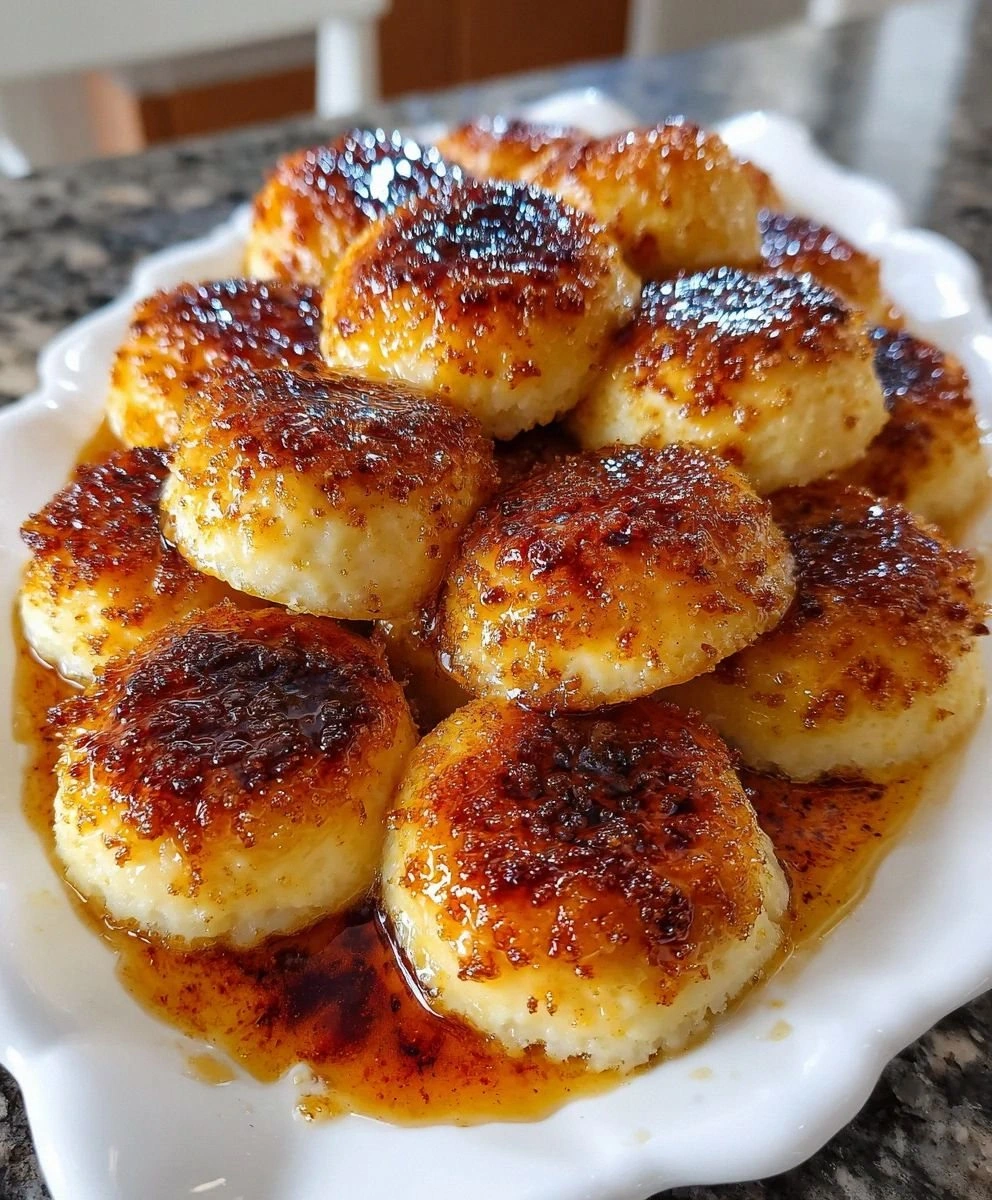
Crackly Caramel Crown: That glass-like sugar top isn't just for show — it provides the exact same satisfying shatter as the classic dessert. We use a combination of white and brown sugar for the brûlée layer, which melts more evenly and gives you that deep caramel flavor without any burnt bitterness. The sound alone will make your dinner guests think you've been secretly attending culinary school.
Vanilla Bean Explosion: Most recipes skimp on vanilla, but we're using both extract AND vanilla bean paste for that authentic custard flavor. The tiny black specks throughout the cookie aren't just pretty — they're pockets of pure vanilla essence that bloom in the oven and make your kitchen smell like you've been steeping custard all day. If you've ever struggled with getting that restaurant-quality vanilla flavor at home, you're not alone — and I've got the fix.
Warm Spice Symphony: A whisper of cinnamon and nutmeg transforms ordinary cookie dough into something that tastes like it came from a French grandmother's secret recipe book. These aren't enough to identify individually, but they create that mysterious "what IS that delicious flavor" moment that keeps people reaching for another cookie. Most recipes skip the spices entirely, which is why they taste like regular cookies with sugar on top instead of actual crème brûlée.
No-Chill Dough Magic: This dough comes together in one bowl and goes straight into the oven — no waiting around for butter to soften or dough to chill. The fat ratio is specifically designed to prevent spreading while still giving you those tender, bakery-style centers. If you've ever been frustrated by cookies that turn into sad, flat puddles, this formula will change your life.
Torch Theater: Using a kitchen torch on cookies feels delightfully transgressive, like you're breaking some kind of baking rule. The sugar melts and caramelizes in real time, giving you that dramatic tableside presentation that makes everyone feel like they're in a fancy restaurant. Plus, it's ridiculously fun — you'll find yourself looking for other things to brûlée.
Make-Ahead Champion: These cookies actually taste BETTER the next day once the flavors meld, and the brûlée topping stays crisp if you store them properly. You can bake the cookies ahead and torch them just before serving, which makes them perfect for dinner parties or holiday cookie exchanges where you want to show off a little.
Inside the Ingredient List
The Flavor Base
Unsalted butter is the foundation here, and please don't try to substitute margarine or coconut oil — I see you thinking about it, and I'm telling you it won't work. Butter provides the richness that makes these taste like actual crème brûlée instead of sugar cookies wearing a fancy costume. The milk solids in butter also help with that gorgeous golden color and contribute to the caramel notes we're building. Make sure it's properly softened but not melted — you should be able to press a finger into it and leave an indent, but it shouldn't feel greasy or slide around in the wrapper.
Granulated sugar does double duty in this recipe — it's in the dough for sweetness and structure, and then we use it again for the brûlée topping. The fine crystals dissolve quickly into the butter, creating tiny air pockets that give our cookies lift without making them cakey. When you're creaming the butter and sugar, don't rush this step — you're incorporating air that translates to tender, not dense, cookies. That sizzle when it hits the pan? Absolute perfection.
Vanilla extract is where we start building that custard flavor, and this is not the place to use artificial vanilla. Splurge on the good stuff — your cookies will taste like they came from a Parisian bakery instead of a gas station. The alcohol in the extract burns off in the oven, leaving behind those complex flavor compounds that make vanilla so much more than just "sweet." If you can find vanilla bean paste, use it here — those little specks are like vanilla caviar and they make everything taste more expensive.
The Texture Crew
All-purpose flour gives our cookies structure without making them tough, but here's the secret — we're using slightly less than most recipes call for. This keeps the centers soft and a little gooey, mimicking that custardy texture we're after. Don't pack your flour into the cup; spoon it in and level it off with a knife. Too much flour is the difference between cookies that melt in your mouth and ones that could double as hockey pucks.
Egg binds everything together and adds richness, but we're using just one for the whole batch. This keeps the dough soft and prevents it from becoming too cake-like. Make sure your egg is at room temperature — cold eggs don't incorporate as well and can cause your butter to seize up into little lumps. If you forgot to take it out ahead of time, submerge it in warm water for five minutes while you prep everything else.
Cornstarch is my secret weapon for tender cookies — just a tablespoon makes them melt-in-your-mouth soft without being crumbly. It's the same principle used in shortbread and Mexican wedding cookies. The starch interferes with gluten development, which sounds technical but basically means your cookies stay tender even if you accidentally overmix the dough a bit.
The Unexpected Star
Heavy cream goes into our brûlée topping, and this is what makes it different from just melting sugar on top. The cream adds richness and helps the sugar caramelize more evenly without burning. When you mix it with brown sugar, you get this gorgeous toffee-like flavor that tastes exactly like the top of a perfect crème brûlée. Don't substitute milk or half-and-half — you need the fat content to prevent the sugar from crystallizing.
Brown sugar brings caramel notes to both the cookie and the topping, and I like to use dark brown sugar for maximum flavor. The molasses in brown sugar adds depth and that subtle butterscotch note that makes people ask for your secret ingredient. Make sure it's fresh — hard, clumpy brown sugar won't cream properly and will leave you with gritty cookies. If yours has turned into a brick, microwave it with a damp paper towel for 30 seconds.
The Final Flourish
Ground cinnamon and nutmeg are used in such small amounts that you won't identify them individually, but they add that "something special" that makes these taste like actual crème brûlée. The cinnamon adds warmth while the nutmeg provides that subtle nutty, almost floral note that great custard has. Use freshly grated nutmeg if you can — the pre-ground stuff loses its complexity quickly and can taste dusty. A microplane zester works perfectly for grating whole nutmeg.
Salt is crucial for balancing the sweetness and enhancing all the other flavors. Just a quarter teaspoon makes the vanilla pop and prevents the cookies from tasting one-dimensional. I use kosher salt because the larger crystals distribute more evenly throughout the dough. If you're using table salt, cut the amount in half — it's much saltier by volume.
Everything's prepped? Good. Let's get into the real action...
The Method — Step by Step
- Start by preheating your oven to 350°F and lining two baking sheets with parchment paper. Don't skip the parchment — these cookies have a tendency to caramelize on the bottom, and you want that easy cleanup. While the oven heats, cream together your softened butter and both sugars until the mixture is light and fluffy, about 3-4 minutes. This is where the magic begins — you're not just mixing, you're incorporating air that will give your cookies lift. The mixture should look pale and increased in volume, like whipped butter that's been to finishing school.
- Beat in the egg and vanilla until completely incorporated, scraping down the sides of the bowl at least once. The dough should look smooth and glossy, not curdled or separated. If your egg was cold and the mixture looks broken, don't panic — just keep beating and it will come together. Add the vanilla bean paste here if you're using it, and watch those beautiful black specks swirl throughout like vanilla constellations.
- In a separate bowl, whisk together the flour, cornstarch, baking soda, salt, cinnamon, and nutmeg. This ensures the leavening and spices are evenly distributed, so you don't get one cookie that tastes like cinnamon toast and another that's bland. Add these dry ingredients to the wet mixture and mix just until no streaks of flour remain. Overmixing develops gluten and makes tough cookies, so when in doubt, stop mixing. The dough should be soft but not sticky, like play-doh that's been left out for an hour.
- Scoop the dough into 1-inch balls and place them 2 inches apart on your prepared sheets. I use a small cookie scoop for uniform sizing, but two spoons work fine. Don't flatten them — they spread just enough to get those perfect crinkly edges while staying thick in the center. If you want that bakery-style appearance, roll the tops in a little granulated sugar before baking — it gives them that sparkly, professional look.
- Bake for 10-12 minutes, until the edges are golden brown and the centers are still slightly underdone. They'll look puffed and soft, which is exactly what you want. Resist the urge to bake them longer — they continue cooking on the hot sheet after you take them out. The smell at this point will drive you absolutely insane, like someone opened a French bakery in your kitchen. Let them cool on the sheet for 5 minutes before transferring to a wire rack.
- While the cookies cool, make your brûlée topping. Combine the brown sugar and heavy cream in a small saucepan and heat over medium until the sugar dissolves and the mixture is smooth and glossy. This should take about 2-3 minutes — don't let it boil or it will become grainy. Remove from heat and let it cool slightly; it should be thick but still pourable, like maple syrup that's been reduced.
- Once the cookies are completely cool, brush a thin layer of the cream mixture on top of each cookie. You want just enough to create a sticky surface for the sugar to adhere to, but not so much that it soaks in and makes the cookies soggy. Let this set for about 10 minutes — it should feel slightly tacky but not wet to the touch. This is the moment of truth where we transform ordinary cookies into something extraordinary.
- Now for the fun part: sprinkle a thin, even layer of granulated sugar over each cookie. You want enough to create a solid sugar crust, but not so much that it piles up and burns. Using your kitchen torch, move the flame in small circles about 2 inches above the sugar. Watch closely — the sugar will melt, bubble, and then caramelize to a deep amber color. This happens fast, usually in under 30 seconds per cookie.
- If you don't have a torch, you can caramelize the sugar under a broiler. Place the cookies on a heat-safe pan and position them 2-3 inches under a preheated broiler. Watch constantly — they'll caramelize in 60-90 seconds. Rotate the pan if necessary for even browning. The sugar should bubble and turn a deep golden brown, but not black. Remove immediately and let cool.
- Let the brûlée topping harden completely before serving — about 5 minutes. The sugar will set into a crisp shell that shatters when you bite into it, just like the real dessert. Store any leftovers in an airtight container, but know that the brûlée topping will soften after a few hours. For maximum crunch, brûlée them just before serving. That's it — you did it. But hold on, I've got a few more tricks that'll take this to another level...
Insider Tricks for Flawless Results
The Temperature Rule Nobody Follows
Room temperature ingredients aren't just a suggestion — they're the difference between cookies that spread evenly and ones that look like they melted in a microwave. Take your butter, egg, and cream out of the fridge 30-60 minutes before you start. Cold butter won't cream properly, leaving you with dense, greasy cookies. A cold egg can cause the butter to seize up into little lumps that never incorporate. And cold cream won't dissolve the sugar properly for your brûlée topping. I know waiting is torture when you want cookies NOW, but trust me on this one.
Why Your Nose Knows Best
Don't rely on the timer alone — your nose is your best kitchen tool. When these cookies are perfectly baked, your kitchen will smell like vanilla and caramel with just a hint of butterscotch. If you smell something toasty and nutty, they're probably done or very close. If you smell burnt sugar, you've gone too far. This might sound like kitchen voodoo, but after you make these a few times, you'll start recognizing the scent of perfectly baked cookies. A friend tried skipping this step once — let's just say it didn't end well.
The 5-Minute Rest That Changes Everything
After you brûlée the sugar, let the cookies sit for exactly five minutes before serving. This isn't just about avoiding molten sugar burns — it's when the magic happens. The sugar cools and hardens into that perfect glass-like surface, the flavors meld together, and the cookie underneath firms up slightly. If you cut into them too early, the sugar will be sticky and the cookie too soft. Too late, and the sugar starts absorbing moisture from the air and loses its crunch. Set a timer — five minutes is the sweet spot for optimal texture.
The Sugar Selection Secret
For the brûlée topping, superfine sugar works better than regular granulated because it melts more evenly without burning. If you only have regular sugar, give it a quick blitz in a food processor or blender to make it finer. Don't use powdered sugar — it contains cornstarch and won't caramelize properly. And while we're on the subject, white sugar gives you a cleaner, more dramatic brûlée, while brown sugar adds deeper caramel notes. I like to use half and half for the best of both worlds.
The Storage Solution
Here's the thing about brûlée — it doesn't stay crunchy forever. The sugar will start absorbing moisture from the air and the cookie within a few hours. If you're making these ahead, store the plain cookies in an airtight container and brûlée them just before serving. For longer storage, you can freeze the baked cookies (un-brûléed) for up to a month. Thaw them at room temperature, then add the sugar and torch away. The brûlée topping will stay crisp for about 4-6 hours in dry conditions.
Creative Twists and Variations
This recipe is a playground. Here are some of my favorite ways to switch things up:
Chocolate Crème Brûlée Cookies
Replace 1/4 cup of the flour with good quality cocoa powder for a chocolate version that tastes like a sophisticated hot chocolate in cookie form. The bitter cocoa plays beautifully against the sweet brûlée topping. Add some chocolate chips to the dough if you want to go full chocolate overload. These are especially gorgeous with white sugar brûlée on top — the contrast between the dark cookie and golden sugar is stunning.
Espresso Crème Brûlée Cookies
Dissolve 1 tablespoon of instant espresso powder in the vanilla extract before adding it to the dough. The coffee flavor enhances the caramel notes and makes these taste like you're eating a cookie version of those fancy coffee crème brûlées you get at upscale restaurants. Perfect for coffee lovers or as an after-dinner treat when you want the flavors of both dessert and coffee.
Orange Zest Crème Brûlée Cookies
Add the zest of one orange to the dough along with the vanilla. The citrus brightens up the rich flavors and adds a sophisticated note that makes these taste like they came from a Michelin-starred restaurant. Orange and vanilla are classic French flavor companions, and the slight acidity helps balance the sweetness of the brûlée topping.
Salted Caramel Crème Brûlée Cookies
Sprinkle a few flakes of sea salt on top of the sugar before brûléeing. The salt enhances the caramel flavors and adds that trendy sweet-salty contrast that makes these completely irresistible. Use a light hand — you want just enough salt to make the flavors pop, not enough to make them taste savory.
Mini Crème Brûlée Cookies
Make these in bite-size portions for parties — just reduce the baking time to 7-8 minutes and use 1/2 teaspoon of dough per cookie. They're perfect for dessert bars or afternoon tea, and the tiny size makes them feel extra fancy. Plus, you can eat more of them without feeling guilty, which is clearly the most important consideration.
Holiday Spice Crème Brûlée Cookies
Add 1/4 teaspoon each of cardamom and allspice to the dough for a holiday version that tastes like Christmas morning. These are incredible with a cup of eggnog or mulled wine, and they make gorgeous gifts when packaged in tins with a little kitchen torch for the recipient. The warm spices complement the caramelized sugar perfectly.
Storing and Bringing It Back to Life
Fridge Storage
Contrary to what you might think, these cookies don't need to be refrigerated — in fact, the humidity in the fridge will make the brûlée topping sticky. Store them in an airtight container at room temperature for up to 3 days. If the sugar does start to soften, you can pop them under the broiler for 30 seconds to re-crisp the tops. Just watch them like a hawk — sugar goes from perfect to burnt faster than you can say "crème brûlée."
Freezer Friendly
The cookies freeze beautifully, but here's the key — freeze them BEFORE brûléeing. Wrap the cooled cookies individually in plastic wrap, then store in a freezer bag for up to 2 months. When you're ready to serve, let them thaw at room temperature for about an hour, then add the sugar and torch away. They'll taste freshly baked, and you get to enjoy that dramatic brûlée moment whenever you want. I dare you to taste this and not go back for seconds.
Best Reheating Method
If your cookies have gone soft (which happens in humid environments), you can revive them in a 300°F oven for 5-7 minutes. This refreshes the cookie base and helps dry out any moisture that's softened the brûlée topping. Let them cool completely before serving — they'll regain some of their original crunch. For the brûlée top specifically, you can hit it with the torch again for just a few seconds to re-caramelize the sugar and restore that glass-like surface.