It all began on a humid Saturday afternoon when my kitchen turned into a miniature volcano. I had just finished roasting a rack of chicken and the aroma of garlic and herbs was so intoxicating that I could almost taste the future of the dish I was about to create. But the real disaster happened when I accidentally knocked over a bowl of cherry tomatoes, splattering red juice across the counter. In that chaotic moment, I realized I needed a dish that could salvage the mess, bring harmony, and offer a burst of sunshine in every bite.
Enter the Lemon Orzo Pasta Salad, a bright, tangy, and utterly crowd-pleasing masterpiece that I discovered after a late-night craving for something both refreshing and filling. Picture a bowl of perfectly al dente orzo, each grain glistening with a glossy lemon vinaigrette, studded with jewel‑sized cherry tomatoes, crisp cucumber ribbons, and a sprinkle of feta that melts into pockets of salty creaminess. The whole ensemble is tossed with fresh spinach, parsley, and dill, giving it a green, herbaceous lift that feels like a fresh breeze on a summer day.
What makes this version stand out is not just the ingredients but the subtle orchestration of flavors and textures. The lemon juice cuts through the richness of the olive oil, creating a bright, zesty base that makes every bite feel light, yet satisfying. The orzo itself is the perfect canvas, its shape holding the dressing and vegetables in a harmonious marriage. And the feta, when crumbled just right, offers a creamy contrast that balances the sharpness of the lemon.
I dare you to taste this and not go back for seconds. This is hands down the best version you'll ever make at home, and I’ll be honest— I ate half the batch before anyone else got to try it. Most recipes get this completely wrong by using too much oil or by not allowing the orzo to absorb the dressing fully. Here’s what actually works: let the pasta sit in the dressing for at least 10 minutes so that each grain soaks up that vibrant, citrusy flavor.
Picture yourself pulling this out of the fridge, the whole kitchen smelling incredible, and seeing the colors pop like a fresh garden on a sunny day. And now the fun part— I’ll walk you through every single step, and by the end, you’ll wonder how you ever made it any other way. Get ready for a culinary adventure that feels like a trip to the Mediterranean without leaving your own kitchen.
What Makes This Version Stand Out
- Flavor Balance: The bright lemon vinaigrette is the star, cutting through the richness of the olive oil and feta, creating a refreshing bite that keeps you coming back for more.
- Texture Play: The orzo provides a pleasant chew, the cucumber adds a crisp snap, and the tomatoes burst with juicy sweetness, creating a sensory tapestry.
- Freshness Factor: Using fresh herbs like parsley and dill instead of dried gives the dish a vibrant, green punch that feels alive.
- Make‑Ahead Friendly: This salad can be prepared the night before, allowing the flavors to meld and the orzo to absorb the dressing for an even richer taste.
- Visual Appeal: The contrast of bright red tomatoes, pale cucumber, and deep green spinach makes this dish a feast for the eyes as well as the palate.
- Quick Prep: With a prep time of just 15 minutes, you can have a full‑blown, restaurant‑quality dish on the table in no time.
Alright, let's break down exactly what goes into this masterpiece. The combination of ingredients and the method of preparation create a dish that is both simple and sophisticated, making it a go-to for any occasion.
Inside the Ingredient List
The Flavor Base
The dressing is the heart of this salad, where fresh lemon juice, Dijon mustard, honey, and extra-virgin olive oil mingle to create a silky, tangy coat for the pasta. The lemon juice provides acidity that brightens every bite, while the mustard adds a subtle depth and the honey balances the sourness with a hint of sweetness. If you skip the honey, the dressing will taste sharper and may overwhelm the delicate flavors of the vegetables.
You can swap Dijon mustard for whole grain mustard if you prefer a more rustic bite, or use a splash of white wine vinegar for a slightly different acidity. When choosing lemon juice, aim for freshly squeezed to capture that bright, citrusy aroma. A good tip: strain the juice to remove pulp for a smoother dressing.
The olive oil should be a high-quality extra-virgin variety, as its fruity notes enhance the overall flavor profile. If you’re watching calories, you can reduce the oil by a tablespoon and compensate with a bit more honey or mustard. Remember, the dressing should coat the pasta evenly; if it looks thin, add a drizzle of oil.
The Texture Crew
Orzo pasta is chosen for its small, rice-like shape that holds onto the dressing and allows every bite to be infused with flavor. Cook it al dente so it retains a slight chew, which contrasts nicely with the crisp cucumber and juicy tomatoes. If you prefer a gluten-free option, swap the orzo for quinoa or couscous; just be sure to rinse the grains to remove any bitterness.
Cherry tomatoes bring a burst of sweetness and a pop of color. They should be halved to release their juices into the dressing, creating a natural sauce around each piece. Cucumber adds a clean, refreshing crunch, but you can also add bell pepper for a sweeter bite. A pinch of salt during the cooking of the pasta enhances the overall flavor.
Spinach provides a subtle earthiness and a nutrient boost. Toss it in at the end to keep it bright and slightly wilted. Red onion adds a sharp bite, but if you’re sensitive to raw onion, blanch it briefly before adding. Feta cheese, crumbled, offers a creamy, salty counterpoint that melts slightly into the dressing, creating pockets of indulgence.
The Unexpected Star
Fresh herbs—parsley and dill—are the secret to the dish’s aromatic lift. Parsley offers a peppery note that balances the sweetness of the tomatoes, while dill adds a subtle, almost piney flavor that complements the lemon. If you’re in a pinch, a handful of basil can replace dill for a sweeter herb profile.
Garlic is used sparingly to avoid overpowering the other flavors; it should be minced finely so it disperses evenly. The key is to let the garlic infuse the oil before adding the lemon, creating a fragrant base. If you’re allergic, simply omit the garlic; the dish remains delicious.
Salt and pepper are essential but subtle; they’re added at the end of cooking to season the entire dish. Don’t be afraid to taste as you go—seasoning is a personal touch that can elevate or diminish the final result.
Everything's prepped? Good. Let's get into the real action.
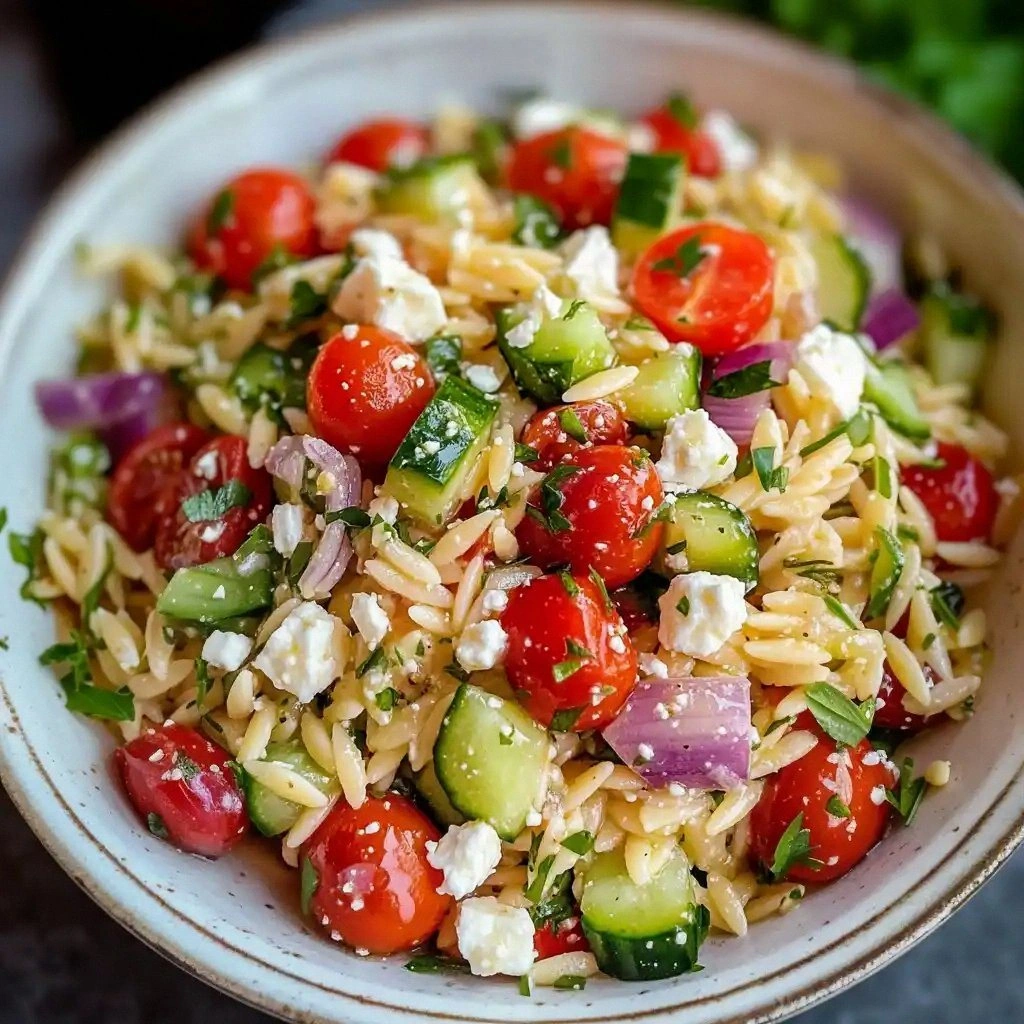
The Method — Step by Step
- Bring a large pot of salted water to a rolling boil. Add the orzo and cook according to package instructions—usually about 9 to 10 minutes—until al dente. As it cooks, stir occasionally to prevent sticking. When the pasta is ready, drain it and immediately rinse under cold water to stop the cooking process. Toss the hot pasta with a tablespoon of olive oil to keep it from clumping.
- While the pasta is still hot, whisk together the lemon juice, Dijon mustard, honey, minced garlic, and olive oil in a small bowl until the mixture emulsifies. This is the moment of truth; the dressing should look glossy and slightly thickened. Taste the dressing and adjust seasoning—add a pinch of salt if it’s too sharp, or a dash of honey if you want more sweetness.
- In a large mixing bowl, combine the drained orzo, halved cherry tomatoes, diced cucumber, sliced red bell pepper, minced red onion, and fresh spinach. Pour the dressing over the pasta and toss until every grain is coated. The orzo will absorb the dressing, becoming fragrant and flavorful. Let the mixture sit for 10 minutes to allow the flavors to meld.
- Fold in the crumbled feta cheese, chopped parsley, and dill. The herbs should be added last to preserve their bright aroma. Mix gently to distribute the cheese and herbs evenly without breaking the feta into a paste. The feta will provide pockets of creamy indulgence.
- Season the salad with salt and freshly ground black pepper to taste. Remember that feta and herbs already bring saltiness, so start with a small amount and adjust as you go. A well-seasoned salad will taste like it was made from scratch.
- Cover the bowl with plastic wrap and refrigerate for at least 30 minutes before serving. This chilling step allows the flavors to develop and the orzo to fully absorb the dressing. If you’re making this ahead of time, store it in an airtight container for up to 2 days.
- Just before serving, give the salad a gentle toss. Taste and adjust seasoning if needed—add a squeeze of lemon or a pinch of salt to brighten the flavors. Garnish with a few extra parsley or dill leaves for a fresh finish.
- Serve the salad chilled or at room temperature. It pairs wonderfully with grilled chicken or fish, but it also makes a satisfying vegetarian main when topped with a handful of roasted chickpeas.
- Enjoy the burst of citrus, the crunch of vegetables, and the creamy feta in every bite. Remember to savor each moment—this dish is a celebration of fresh ingredients and thoughtful preparation.
That's it— you did it. But hold on, I've got a few more tricks that'll take this to another level.
Insider Tricks for Flawless Results
The Temperature Rule Nobody Follows
Cooking the orzo to the exact right temperature is critical. If it’s too soft, the grains will collapse and the salad will become mushy; if it’s too firm, it won’t absorb the dressing well. Aim for an internal temperature of around 140°F (60°C) when you first add the dressing. A simple way to check is to taste a grain—if it’s slightly chewy, you’re good.
Why Your Nose Knows Best
Before you finish the salad, take a quick sniff of the dressing. A bright, citrusy aroma indicates that the lemon juice is fresh and the dressing is properly emulsified. If it smells flat, add a splash more lemon or a pinch of salt to revive the flavor. Your nose is a reliable judge of freshness.
The 5-Minute Rest That Changes Everything
After draining the orzo, let it sit for 5 minutes before rinsing. This brief rest allows the starch on the surface to firm up, preventing the grains from sticking together. It’s a small step that makes a huge difference in texture.
The Herb Timing Trick
Add parsley and dill at the very end of the mixing process. This preserves their bright, green color and ensures their flavors remain fresh. If you add herbs too early, they can wilt and lose their vibrant aroma.
The Secret to Creamy Feta
Crumbled feta should be added just before serving to keep it from breaking into a paste. If you prefer a creamier texture, you can fold in a tablespoon of Greek yogurt along with the dressing for a richer mouthfeel.
Creative Twists and Variations
This recipe is a playground. Here are some of my favorite ways to switch things up:
Mediterranean Kick
Swap the feta for crumbled goat cheese and add kalamata olives for a salty, briny twist. Toss in a handful of chopped sun‑dried tomatoes for a sweet‑savory note that pairs beautifully with the lemon.
Summer BBQ Boost
Add grilled corn kernels and a splash of smoky chipotle mayo to the dressing. The smoky flavor complements the sweet corn and adds depth to the bright lemon base.
Protein Power
Stir in a cup of cooked quinoa or chickpeas for an extra protein boost. This makes the salad a hearty main dish, perfect for a quick weeknight meal.
Vegan Version
Replace feta with crumbled tofu or a vegan cheese alternative, and use maple syrup instead of honey. The result is a plant‑based salad that still delivers on flavor and texture.
Winter Warmth
Add roasted butternut squash cubes and a pinch of cinnamon to the salad. The sweet, earthy flavors complement the citrusy dressing for a comforting winter twist.
Herb Garden Surprise
Swap parsley and dill for fresh basil and mint. The combination gives the salad a refreshing, almost tropical vibe that’s perfect for a garden gathering.
Storing and Bringing It Back to Life
Fridge Storage
Store the salad in an airtight container for up to 2 days in the refrigerator. If the dressing separates, give it a quick stir before serving. The orzo will remain crisp and the flavors will stay vibrant.
Freezer Friendly
For longer storage, freeze the salad without the dressing. Add the dressing and fresh herbs just before serving. This method preserves the texture of the orzo and the freshness of the vegetables.
Best Reheating Method
When reheating, sprinkle a tiny splash of water over the salad and cover it loosely with foil. Warm it in a 350°F oven for about 5 minutes, then fluff with a fork. This keeps the salad moist and prevents the orzo from drying out.